
“If You Think Good Legal Advice is Expensive, You Should See The Cost Of Bad Legal Advice”
How a Paralegal Can Help You: Understanding My Role
What Is A Paralegal
In Ontario, Paralegals are Licensed Legal Professionals authorized to provide legal services to the public in specific areas of law. Regulated by the Law Society of Ontario (LSO), they play a vital role in increasing access to justice.
What Can Licensed Paralegals Do
- Small Claims Court (claims up to $35,000)
- Landlord and Tenant Board matters
- Provincial Offences Court (such as traffic tickets and by-law violations)
- Select tribunals and administrative boards
What Does It Mean To Be A Licensed Paralegal
As a Licensed Paralegal regulated by the Law Society of Ontario, I work closely with clients to navigate the legal process, prepare necessary documentation, and advocate on their behalf at hearings and proceedings. My goal is to provide clear, practical guidance and effective representation to help you achieve your goals.
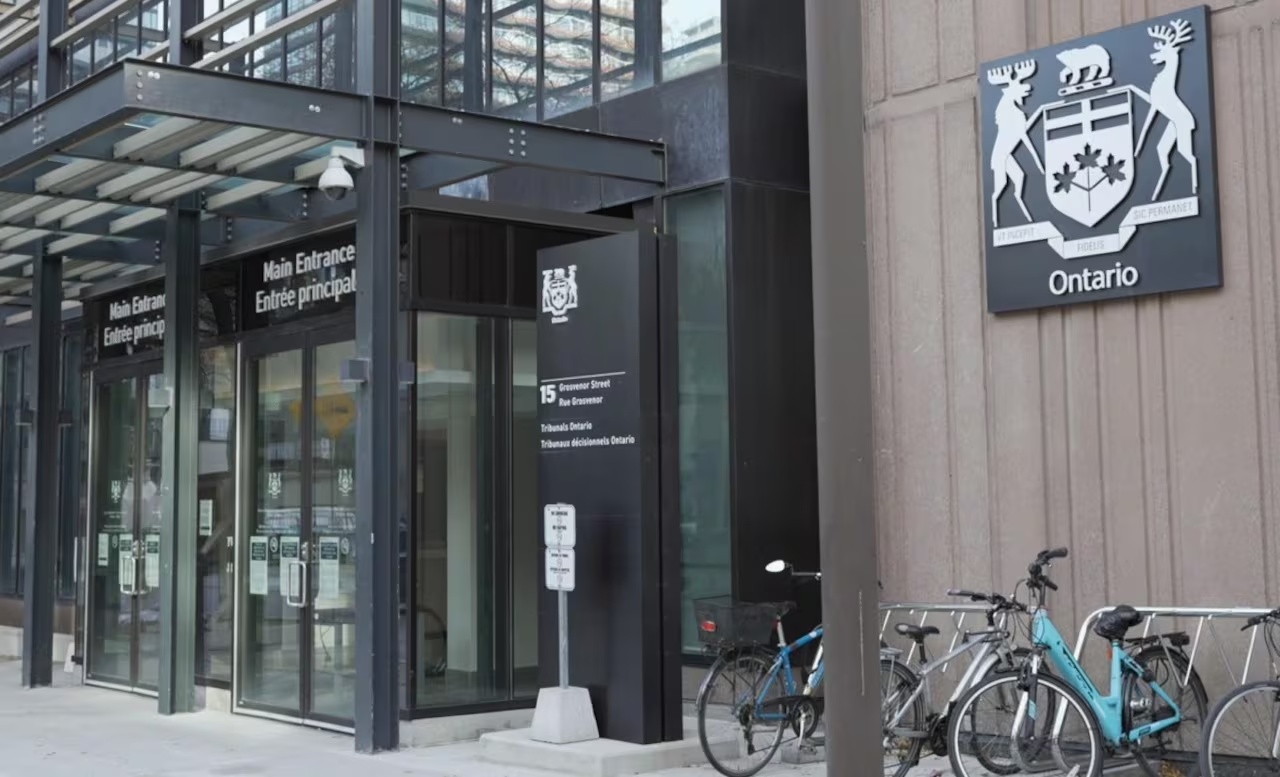

Landlord Tenant Board
Overview
I help resolve disputes at the Landlord and Tenant Board, including rent arrears, evictions, repairs, and tenancy-related issues. I handle the paperwork, communicate with the other side and the Board, and represent clients at hearings — with practical guidance and cost‑effective solutions.
What I Do
- Explain your options clearly and directly
- Prepare and file LTB applications, responses, and supporting documents
- Draft notices, letters, and settlement agreements
- Communicate with the other side and the LTB on your behalf
- Represent you at mediation and hearing
- Assist with enforcing LTB orders and collecting unpaid rent
Type of Matters
- Rent arrears and eviction-related applications
- Maintenance and repair disputes
- Illegal subletting or assignment
- Abandoned units and possession issues
- Repayment agreements and settlement negotiations
Small Claims
Overview
I assist clients with monetary disputes in Small Claims Court (claims up to $50,000). I manage the process from claim or defence, focusing on practical, cost‑effective results so you can focus on what matters most.
What I Do
- Assess your claim or defence and explain options clearly
- Prepare and file claims, defences, counterclaims, and supporting documents
- Draft demand letters, settlement offers, and agreements
- Gather and organize evidence (invoices, contracts, photos, correspondence)
- Communicate with the other side and the court on your behalf
- Represent you at pre‑trials, mediations, and hearings
- Assist with enforcing judgments and collecting awarded amounts
When Small Claims Court Is Right For You
- Recover money owed: When invoices, unpaid bills, or personal loans haven’t been repaid, Small Claims lets you pursue the amount owed (up to $35,000) without higher court costs.
- Enforce contracts: If someone failed to deliver goods or services, or breached a written or verbal agreement, Small Claims provides a formal forum to seek compensation.
- Resolve consumer disputes: Purchase problems, faulty goods, incomplete services, and refund disputes can be settled efficiently in Small Claims.
- Fix property damage: Claim compensation for damage to property caused by another party (tenant damage, contractor errors, vehicle-related incidents under the monetary limit).
- Return of personal property: Use Small Claims to recover items or receive compensation when the other party refuses to return belongings.
- Security deposit and rental disputes: Landlords and tenants can recover deposits or claim damages related to tenancy where amounts fall within the limit.
- Faster and more affordable than higher courts: Procedures are simpler, costs are generally lower, and cases move more quickly.
- Formalizes settlement attempts: Filing a claim often motivates negotiation or repayment and gives you legal leverage if settlement talks fail.
- Court‑ordered resolution and judgment enforcement: A Small Claims judgment is enforceable — you can use garnishment, writs of seizure, or other collection steps to collect what you’re owed.

Provincial Offences
Overview
I represent people and businesses in Provincial Offences matters (e.g., traffic tickets, municipal by-law charges, and other regulatory offences). I handle paperwork, communicate with prosecutors, and appear in court to seek the best possible outcome.
What I Do
- Explain your options and likely outcomes clearly
- Review the charge, evidence, and disclosure
- Prepare and file required documents and requests (e.g., trial dates, disclosure motions)
- Communicate with prosecutors and opposing parties on your behalf
- Represent you at trials, early resolution meetings, and hearings
- Advise on fines, penalties, and potential impacts (insurance, licensing)
Type of Offences
- Traffic and driving-related offences (tickets, licence issues)
- Municipal by-law charges (property standards, noise, zoning)
- Regulatory and business-related offences (licence or permit breaches)
- Parking and administrative penalties where contesting is appropriate
TAKING THE NEXT STEPS
How It Works
Start with a free 30‑minute intake to determine whether I can help and to outline the issue. During the meeting, bring relevant documents (contracts, notices, invoices, photos). I’ll provide a clear plan of action and explain hourly billing and expected costs. I handle preparation — forms, filings, and communications — and represent you at pre‑hearings, mediations, and hearings as needed.
Fees & Billing
Ongoing work and matters are billed at hourly rates, and I use transparent billing practices so you always know what you’re being charged.
Why Work With Me
I’m a Licensed Paralegal regulated by the Law Society of Ontario. I provide practical guidance focused on results, a cost‑effective and efficient approach, and clear communication throughout your matter. My experience representing clients at tribunals and courts means I know how to move cases forward and help you get the outcome you need.
Getting Started
Book a free 30‑minute intake or contact me with your documents and a short summary of the issue. I’ll review and outline next steps and a plan of action.

Understanding Paralegal Billing Practices
Paralegals typically charge clients by the hour but track their time in smaller units—most commonly in six-minute increments (1/10th of an hour).
Each task performed on a client’s behalf—no matter how minor—is carefully logged and described. This includes activities such as:
- Drafting documents
- Writing or responding to emails
- Making or receiving phone calls
- Conducting legal research
- Preparing for hearings
All-time entries are compiled into a detailed invoice, showing the specific work done and the amount of time spent on each activity. The total bill is calculated by multiplying the total time recorded by the Paralegal’s Hourly rate.
This transparent billing method helps clients understand exactly what services were provided and how their fees are determined.
 V Robertson Legal Services